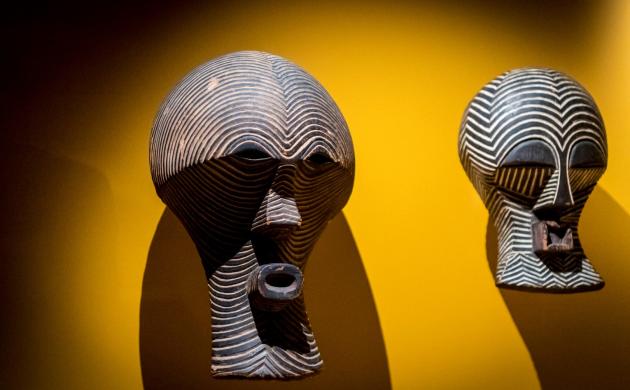
The MAS preserves culturally and historically sensitive Congolese heritage. In what circumstances did this collection of approximately 3,800 cultural objects come into being? A two-year research project will map this out more clearly.
The organisation of the Games in Antwerp was a feat in and of itself, and were really groundbreaking. In this small exhibition, you can view posters, photos, trophies and more.
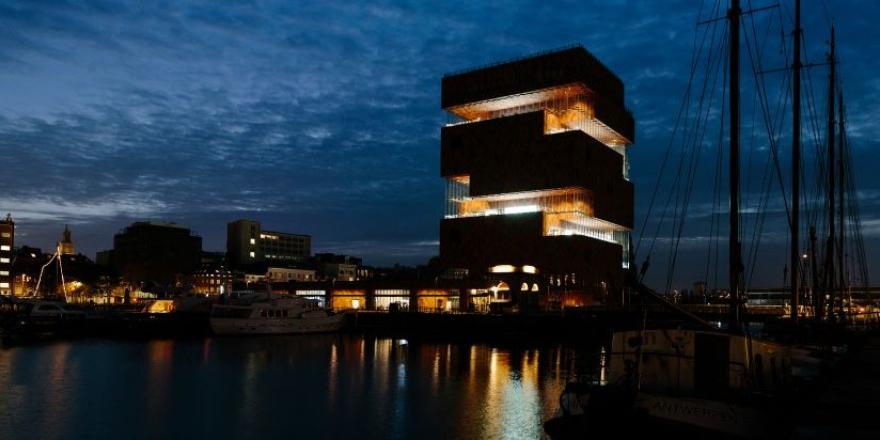
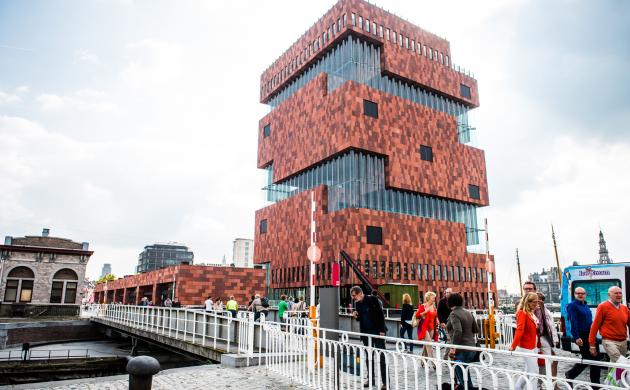
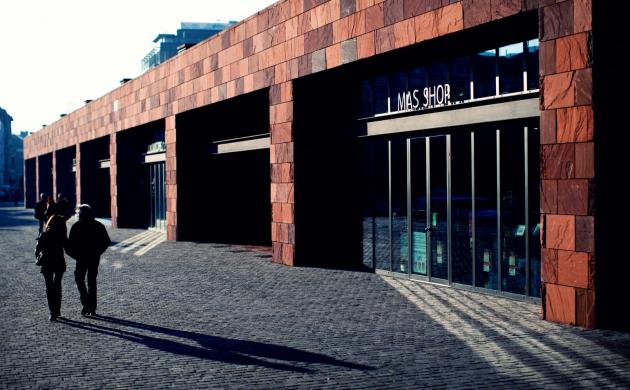
In the shadow of the MAS, you'll find several publicly accessible pavilions that you can visit. There you will discover more stories about Antwerp today.
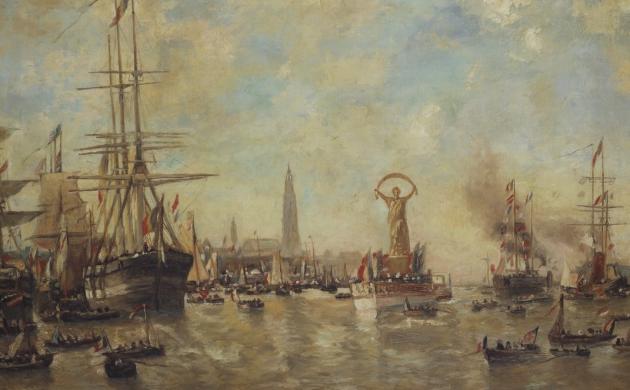
The freeing of the Scheldt was a landmark event in Flemish history. In mid-1863, Antwerp celebrated that after more than 250 years, merchant shipping on the Scheldt was truly free again. A telling painting of this ‘Scheldt Free!’ celebration from the MAS collection can be seen in our Visible Storage.
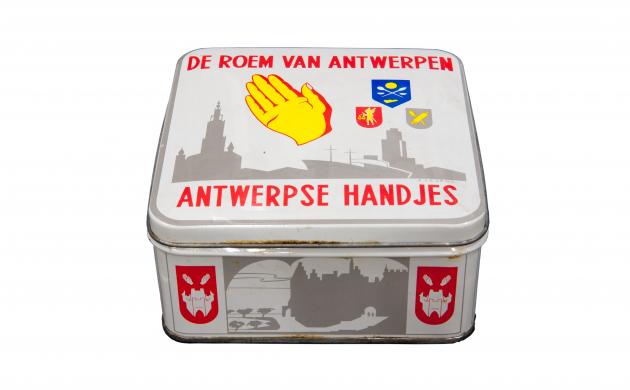
The Antwerp Hand biscuits are the most well-known tourist souvenir from the city. In the MAS collection, we find many packagings of the biscuits. However, behind the scenes of the little biscuit, there is more than one story to tell.
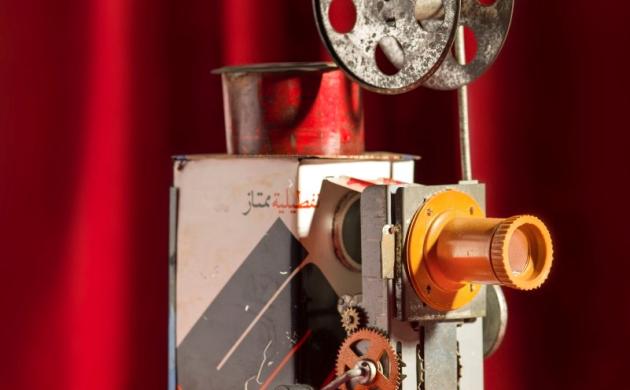
CLOSED | You could find out more about the people behind the objects of the MAS: who used them, who collected them? And at the same time, you could take a look behind the scenes of the museum.
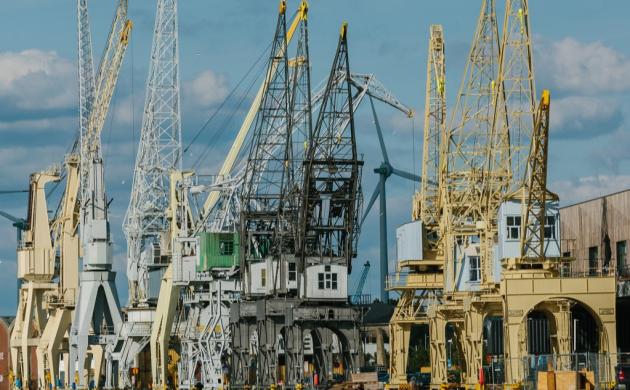
The MAS' largest and most impressive collection pieces can be seen on the Scheldt quays. And just in front of the MAS, you almost bump into the showpiece of our collection.
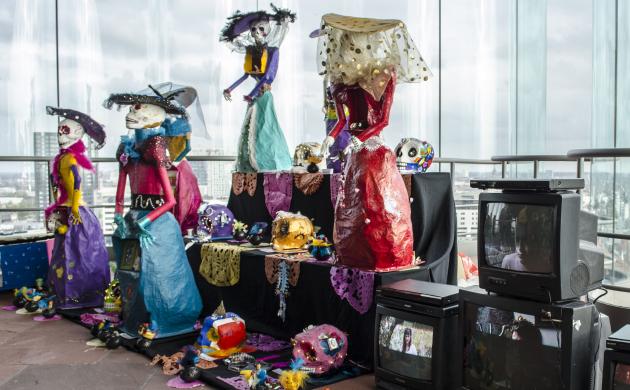
This year, we are creating the city's playlist for the Altar of Antwerp. This playlist will consist of songs that city residents bring in. Each song is linked to a moment, a person or a feeling that the participant wants to evoke.
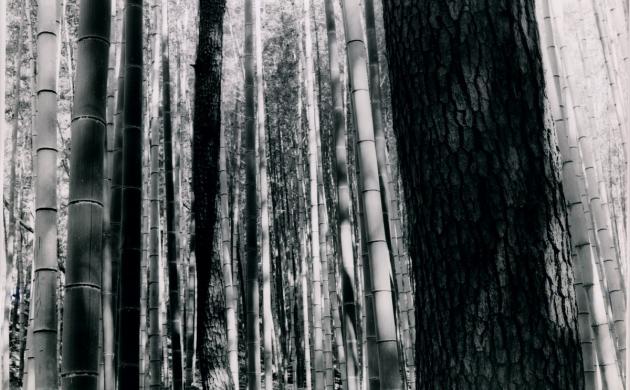
Photographer Mark De Fraeye and his wife donated some of their photo series to the MAS. De Fraeye's series 'Ahopsan Forest' is a visual manifesto for the preservation of the forest in South Korea.