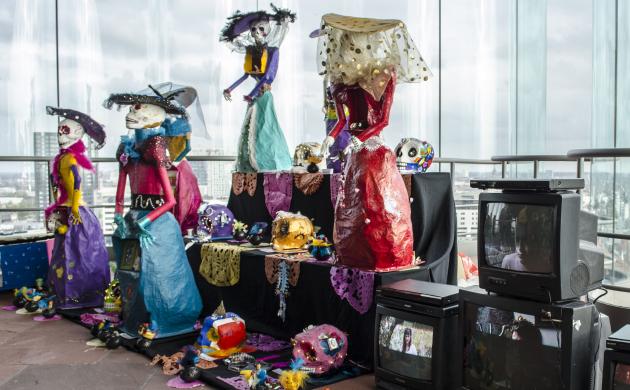
This year, we are creating the city's playlist for the Altar of Antwerp. This playlist will consist of songs that city residents bring in. Each song is linked to a moment, a person or a feeling that the participant wants to evoke.
In 1890, the painter Louis van Engelen depicted a crowd of Belgian emigrants moving across Antwerp’s Nassau Bridge to the district of Het Eilandje towards a ship. The resident population watches them pass by.
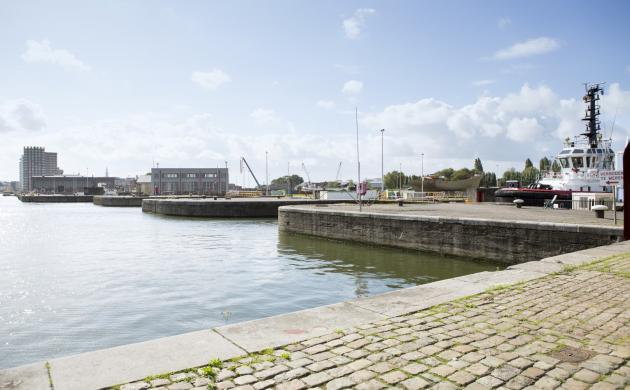
Along the frayed fault line between the city and port lies a raw and rusty area. For many Antwerp residents, this represents a blind spot on the map. However, this area oozes history linked to the once bustling in-city port.
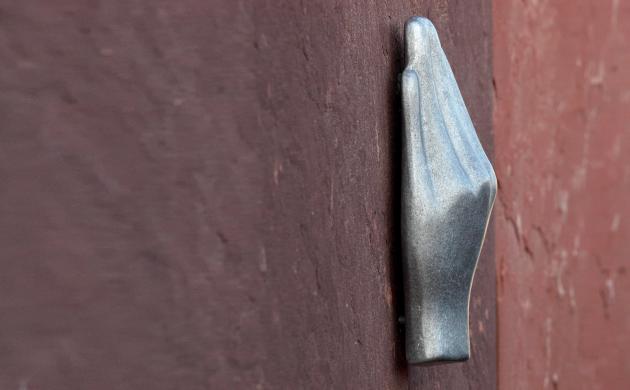
The legend of Brabo and Antigoon makes the hand the symbol of Antwerp. But the little hands on the facade are also a reminder of the many patrons who helped build the MAS.
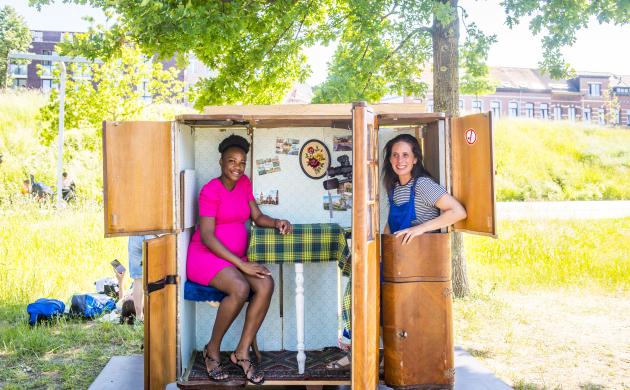
The MAS, together with a number of key partners, collected stories from Antwerper citizens about what a "home" means to them. A dozen families collaborated on the exhibition for a year.
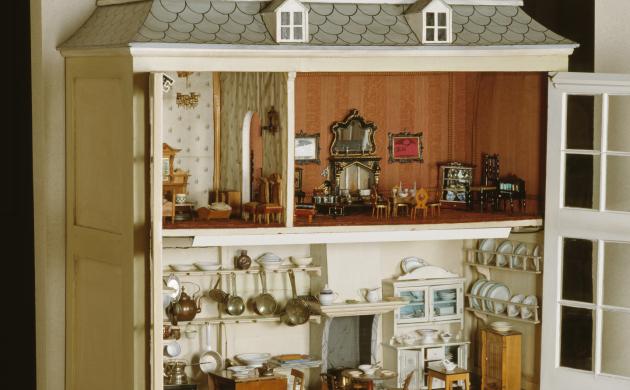
In preparation for the family exhibition Anybody home?, the MAS had a 19th-century wooden dollhouse restored. The house and its furnishings were carefully refurbished.
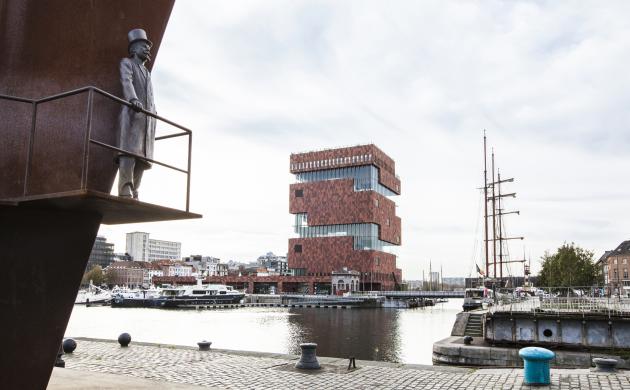
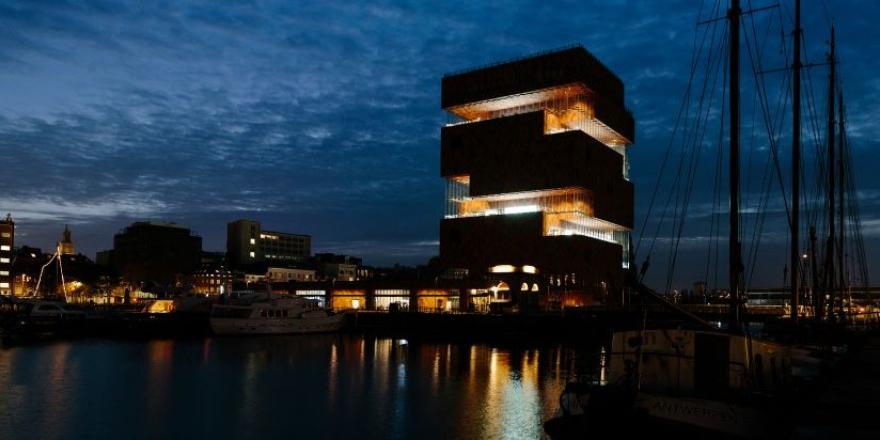
The MAS is a striking red building on the waterfront. What is the origin of this contemporary warehouse? What techniques did its architects use, and why? Ask all your questions during the MAS architectural tour.
Every district of Antwerp consists of a wonderful mix of historical buildings and modern architecture. To see all of this beauty you actually would need wings. But fortunately there are several places, both high up in the air and on the ground, to see as much as possible of the city.
Abram Spiwak decided to follow his beloved Sophie to America. He did not have valid papers, but he tried his luck with the financial support of his family.
Photographs show the people involved and the circumstances surrounding their emigration. Consequently, photography is an important source of information for the story of the Red Star Line.