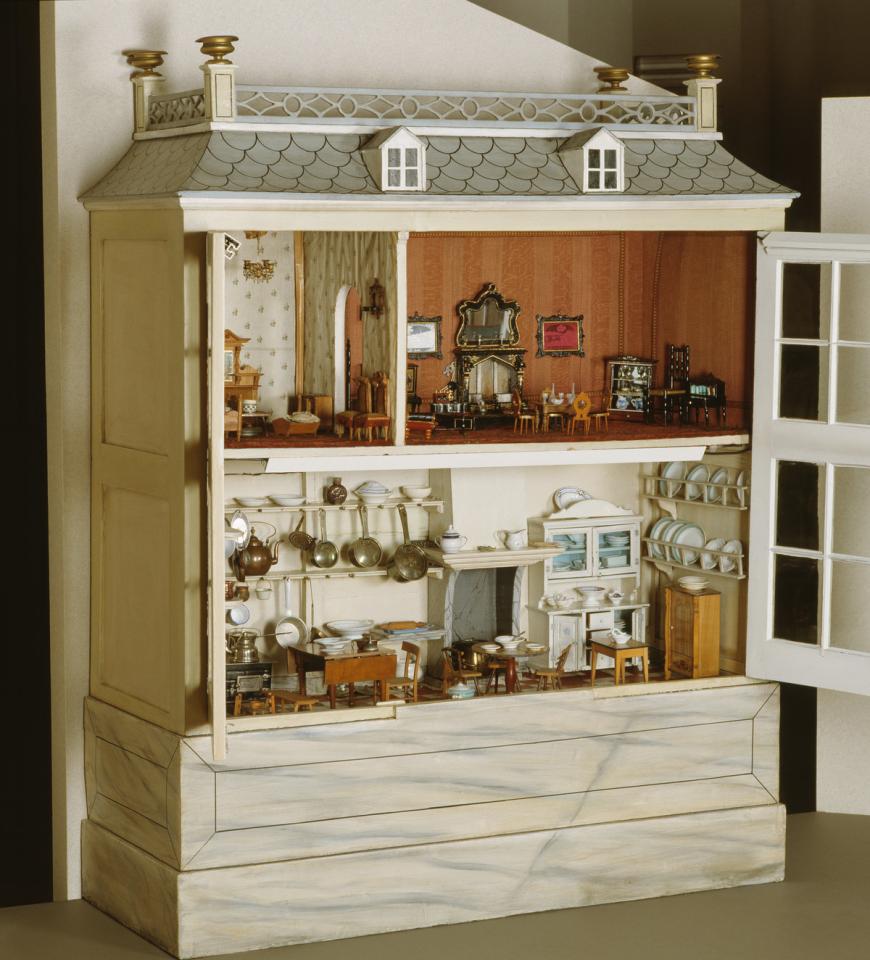
Dollhouse before restauration
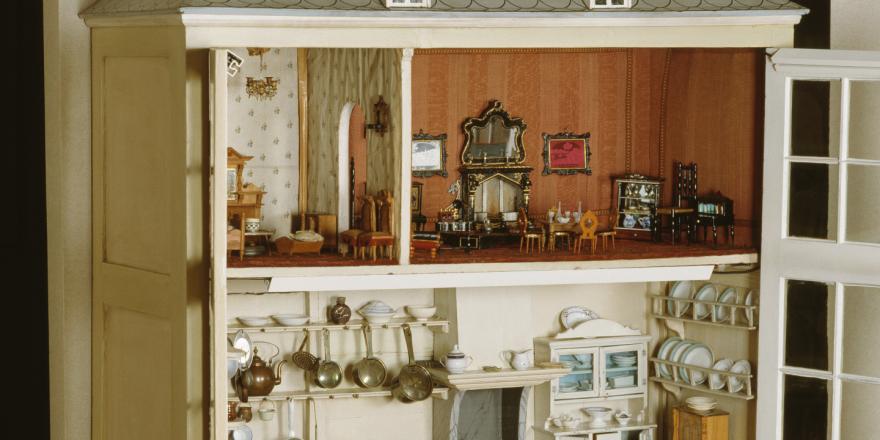
This dollhouse was made in the nineteenth century. It belonged to the Kreglinger family, who opened a business in Antwerp at the end of the eighteenth century. In 1962, the family donated the dollhouse to the city. It thus became part of the collection of the then Volkskundemuseum and later that of the MAS.
Many European dollhouses from the nineteenth century or earlier were intended to be looked at. As exhibition pieces, they adorned bourgeois interiors. But this house was meant to be played with, for children. This is evidenced by numerous small repairs made over the years. However, looking at it is certainly no less enjoyable. Fascinating details can be discovered throughout the richly furnished interior.
The dollhouse is on display in the family exhibition Anybody Home? In preparation, the house and its furnishings were carefully restored. In A glimpse of the Collection, the exhibition in the Visible Storage, you can take a look behind the scenes and discover what is involved in this process.
The restoration project
After checking the condition of the dollhouse and its 238 interior elements, active conservation treatment was started in 2022. Missing, loose, and torn parts, caused by intensive play, were a common type of damage. Where possible, we restored the strength, stability, and visual clarity as much as possible.
The wooden dollhouse has undergone several renovations. This is evident from the different layers of paint and the floor and wall coverings, under which several layers of paper wallpaper were hidden.
- The cracks in the house were filled with balsa wood and finished with gesso. The fillings were then colored.
- Metal kitchen accessories were ‘used for their intended purpose’ during play, causing damage. For example, metal jugs were filled with water, causing visible corrosion and rust. These objects were surface cleaned. Rust and copper corrosion were treated and/or stabilized locally.
- The cracks in the house were filled with balsa wood and finished with gesso. The fillings were then colored.
- Metal kitchen accessories were ‘used for their intended purpose’ during play, causing damage. For example, metal jugs were filled with water, causing visible corrosion and rust. These objects were surface cleaned. Rust and copper corrosion were treated and/or stabilized locally.
- Ceramic tableware sets were cleaned with cotton swabs and distilled water.
- The interior textiles of the house were also heavily soiled and were loose or deformed in various places. The textiles were thoroughly vacuumed with a museum vacuum cleaner. Loose braids were reattached and the wavy carpet (which meant that the furniture had no flat surface to stand on) was loosened and smoothed out. The paper wallpaper was refreshed with smoke sponges.
- Various textile accessories, such as the bed cushions, furniture fabrics, fringes, and doll clothing, were vacuumed and cleaned.
- The fragile and brittle fabric covering the piano was removed and replaced with a similar fabric.
- The porcelain doll is missing a foot, which meant that it was displayed lying down for a long time. We decided to repair this and then display the doll standing up.
The restoration was made possible through collaboration and advice within the conservation and restoration field, with thanks to external restorers, conservation and restoration students at the University of Antwerp, and restorers from Behoud en Beheer, Musea en Erfgoed (Preservation and Management, Museums and Heritage).