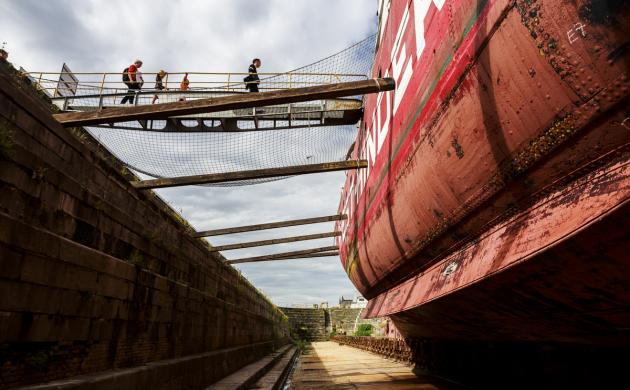
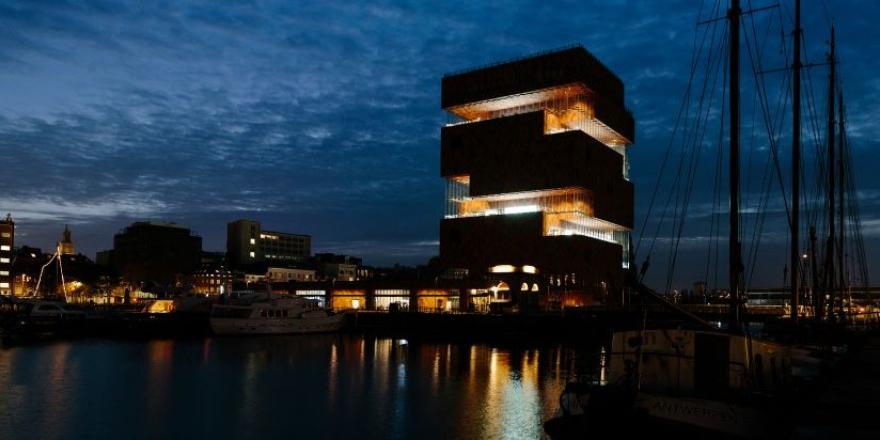
Just beyond the MAS lies the dry dock site: nine non active dry docks, former workshops for ship repairers, a pump house which is now a protected monument ... It now houses the MAS vessel collection.
In 1890, the painter Louis van Engelen depicted a crowd of Belgian emigrants moving across Antwerp’s Nassau Bridge to the district of Het Eilandje towards a ship. The resident population watches them pass by.
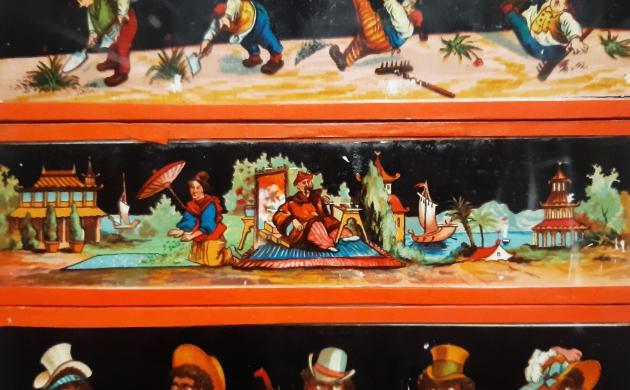
The MAS started digitizing its collection of thousands of slides. These slides that used to be projected with a magic lantern, are finally seeing the light of day again.
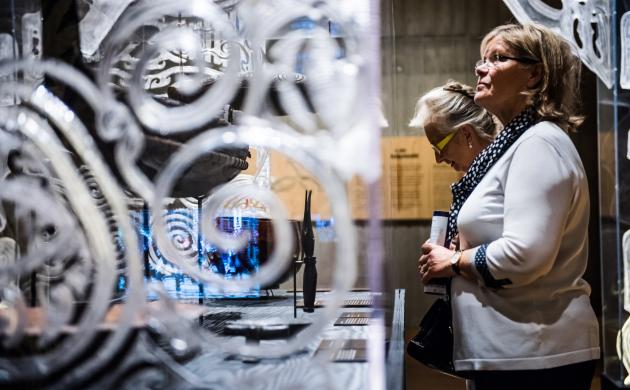
People have been fascinated by power for centuries. Why is power so seductive? What kind of prestige accompanies it? A highly topical theme in which – who knows? – you may find some personal relevance.
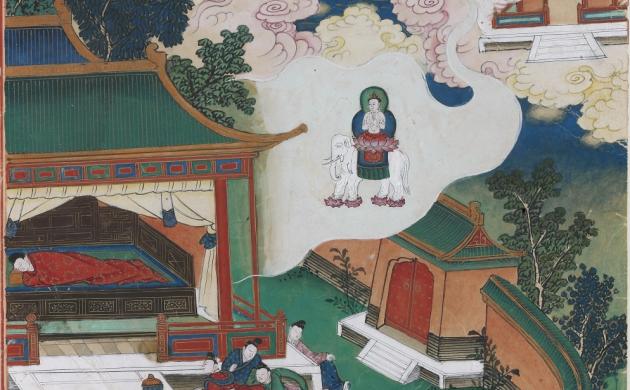
The 54 preserved miniatures in this series together form a visual guide for meditation on a mandala. This is a depiction of the cosmos, in this case with Sarvavid Vairocana – the most important of the five heavenly or dhyani Buddhas.
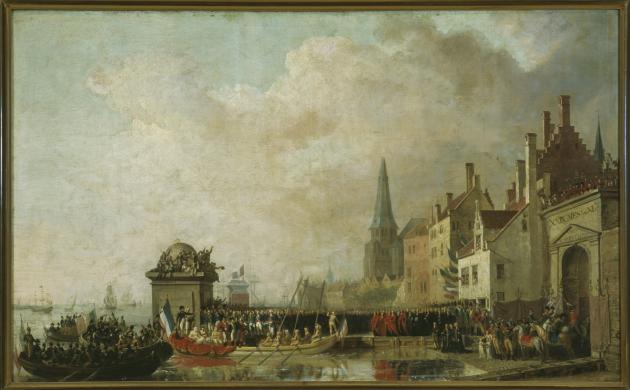
Napoleon's visit to Antwerp in 1803 was a high point for the city on the Scheldt. Joséphine de Beauharnais, Napoleon's wife, ordered a painting to immortalise the entry. This is a preliminary sketch for that.
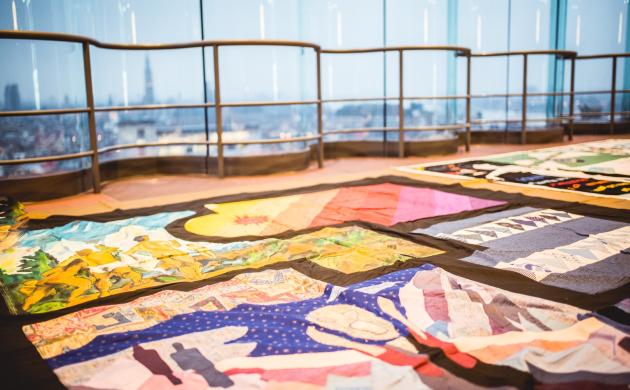
The Flemish non-profit organisation Sensoa donated its collection of quilts to the MAS. It consists of unique and personal canvases, each commemorating an AIDS victim. The creations are not limited to the traditional quilting (patchwork) technique. Some canvases were drawn or painted.
Japanese fashion also has a global impact. The exhibition showed how Japanese avant-garde fashion from the 1980s is still alive and well. Visitors were also exposed to Tokyo's colourful Cute Fashion.
The exhibition '100 x Congo' focuses on one hundred unique Congolese works.What are the stories behind the Congolese objects? And how did they end up here? What was their significance to various Congolese peoples? And where lies the future of the collection?