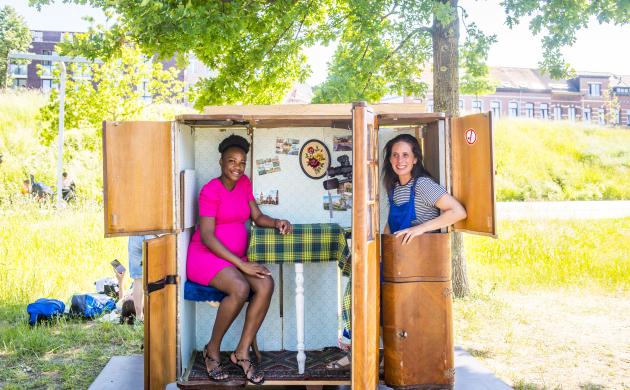
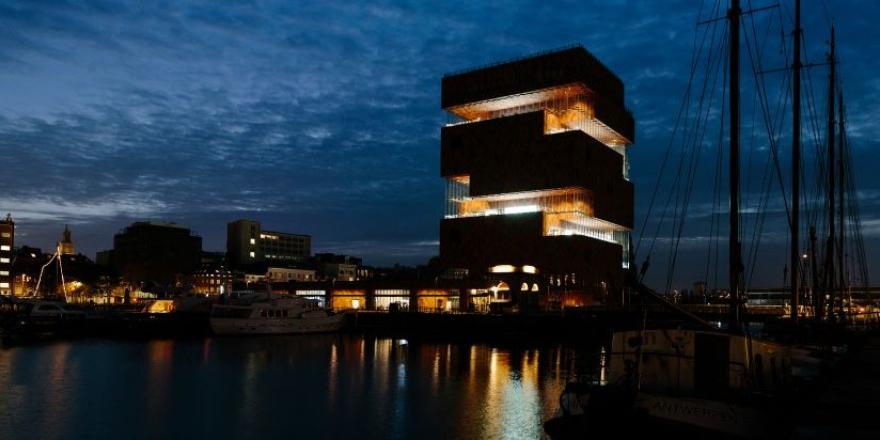
The MAS, together with a number of key partners, collected stories from Antwerper citizens about what a "home" means to them. A dozen families collaborated on the exhibition for a year.
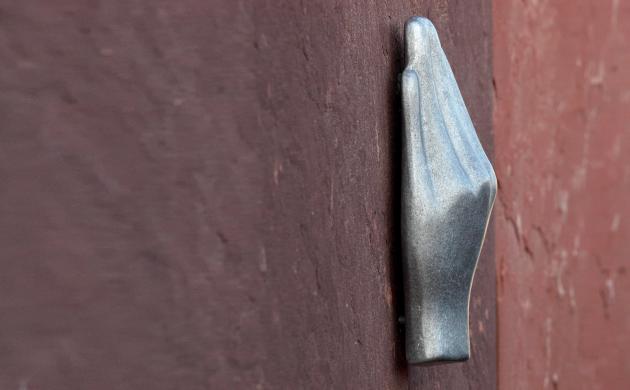
The legend of Brabo and Antigoon makes the hand the symbol of Antwerp. But the little hands on the facade are also a reminder of the many patrons who helped build the MAS.
The escalators in the MAS didn't only take visitors up to the roof, they also allowed to travel through time with impressive photographs of the collection.
The historic grain elevator is under joint management of the MAS and the Maritime Museum Rotterdam. The extraordinary vessel will moor half of the time in Antwerp and the other half in Rotterdam.
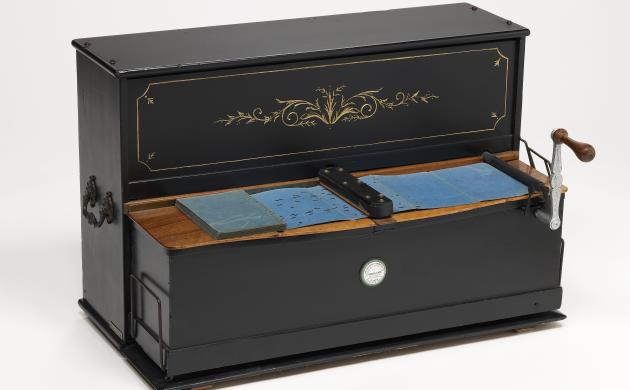
Except for a dozen or so loans, all the pieces on display in the exhibition come from the MAS collection. The objects have been chosen for what they portray, their significance or their (historical) story.
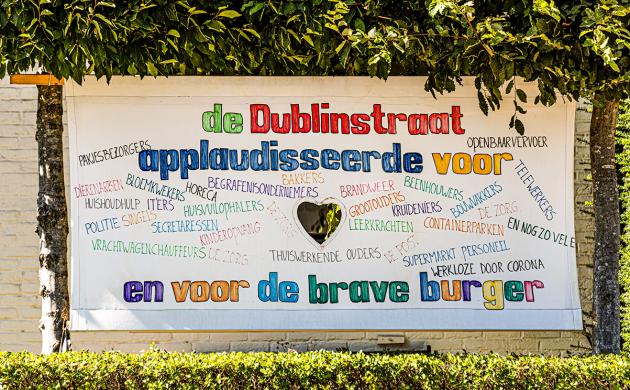
The MAS and the FelixArchief invited all Antwerp citizens to contribute to an archive about daily life during the coronapandemic in Antwerp. Many Antwerp citizens responded with an often very personal contribution.
The MAS collection consists of more than 500,000 objects about art, cultural traditions and history of the city and port of Antwerp. But also of Europe, Asia, Africa, America and Oceania.
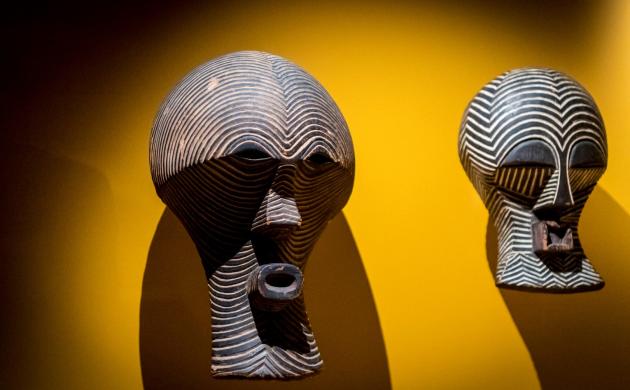
The MAS preserves culturally and historically sensitive Congolese heritage. In what circumstances did this collection of approximately 3,800 cultural objects come into being? A two-year research project will map this out more clearly.
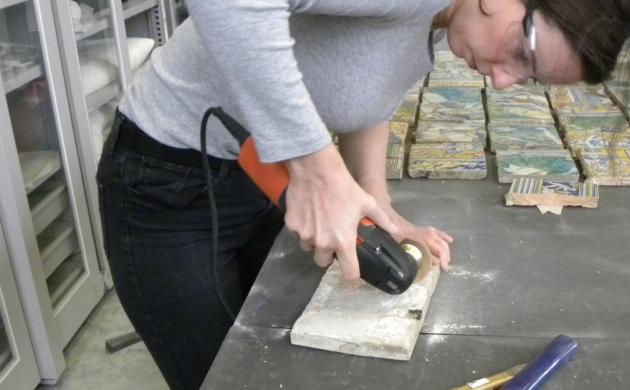
The tile panel 'The Conversion of Saul' is one of the most important pieces of the MAS I Vleeshuis collection, the collection of applied arts and history from the city of Antwerp.
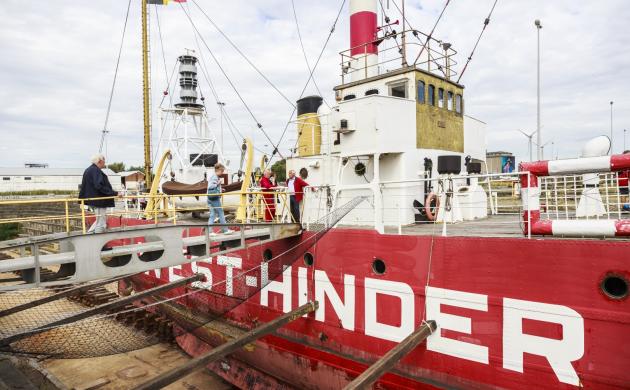
The MAS manages the largest collection of historical vessels in the country. For years, it was displayed under the shelters next to Het Steen, but after a spectacular relocation operation, the vessels found a new home at the Dry Docks site.