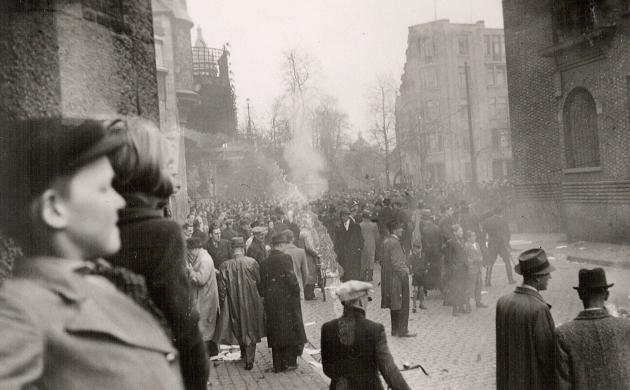
In Antwerp, more than 23,000 people lost their lives as a result of Nazi terror, the persecution of Jews, and military violence. The dictatorship divided the city’s population and led to the large-scale persecution of Jews and those who resisted the regime. With the port serving as a strategic target, military threats were ever-present. Bombing raids claimed countless victims. The city was deeply scarred by war and persecution.
What was it like to live in an occupied city? What happens when fundamental values such as freedom and equality are taken away? Who suffers first, and who escapes the consequences? What role do local authorities and the police play? And perhaps most importantly: what would you have done? Flee or stay? Collaborate with the occupiers? Resist? Or wait in fear, hoping it would all come to an end?
“City at War: Antwerp, 1940–1945” is a permanent exhibition that brings the society of wartime Antwerp to life through symbolic spaces such as a movie theater, a school, a home, the cathedral, and City Hall. Through compelling stories of powerlessness, betrayal, and violence, as well as courage, resistance, and solidarity, the exhibition invites visitors to reflect on the choices people faced during one of the darkest periods in the city’s history.
Practical
- 'City at war. Antwerp 1940 - 1945' is displayed on the 4th floor of the MAS.
The exhibition came about as part of the long-term city project 'Antwerpen Herdenkt'.