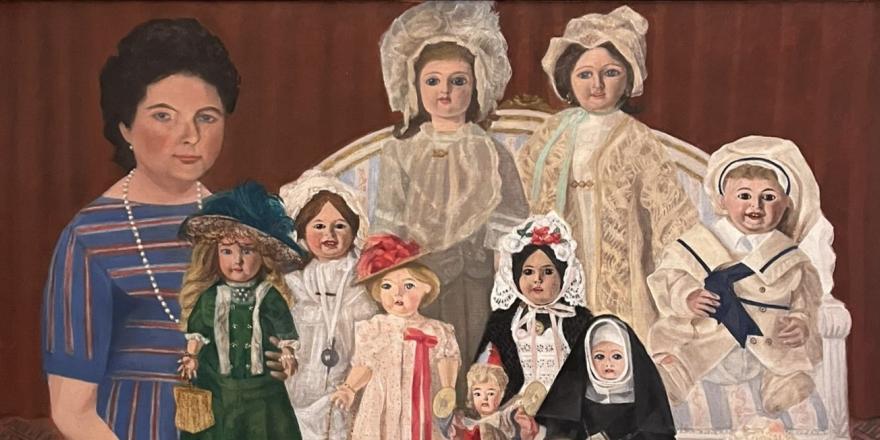
Maria Nijs collected no fewer than 200 valuable dolls produced in Europe between 1830 and 1930. Some were once expensive toys, while others mainly served as decorative dolls. From her remarkable collection, MAS acquired eleven dolls. The painting of Maria with her favorite dolls, made by her father, is now also part of the MAS collection. The 11 dolls, along with the painting, are on display in the Visible Storage from June 9 through January 4, 2027.
This acquisition nicely complements the MAS doll collection. MAS is not a toy museum, but it does collect dolls because they clearly reflect cultural norms. They imitate human characters and also encourage imitation among people. Maria Nijs’s dolls appear as ideal role models. With their elegant lace and silk clothing, they represent European bourgeois values. They show how wives, mothers, girls, nuns, and domestic staff were expected to look.
Watch the interview with Maria Nijs about her collection here.