

Breedbeeld. Interwoven Worlds of Bruges (900–1550)
In the brand-new art hall in the heart of Bruges, the cultural-historical exhibition “Breedbeeld” opened on May 8, 2026. It sheds new light on Bruges as a metropolis (from 900 to 1550).
Through exceptional works of art from museums around the world, the exhibition shows how Bruges remained connected to the wider world for centuries: from Venice to Jerusalem, from the North Sea to the Mediterranean, and to the so-called “New World.” MAS also contributes to this prestigious inaugural BRUSK exhibition with a unique ivory masterpiece from its African collection, along with a cast of a 9th-century stern ornament.
After the exhibition, the Afro-Portuguese salt cellar will once again be on display in the MAS permanent exhibition “Freight”.
- The exhibition “Breedbeeld” at BRUSK, Dijver 12, 8000 Bruges, is open from May 8 to September 6, 2026.
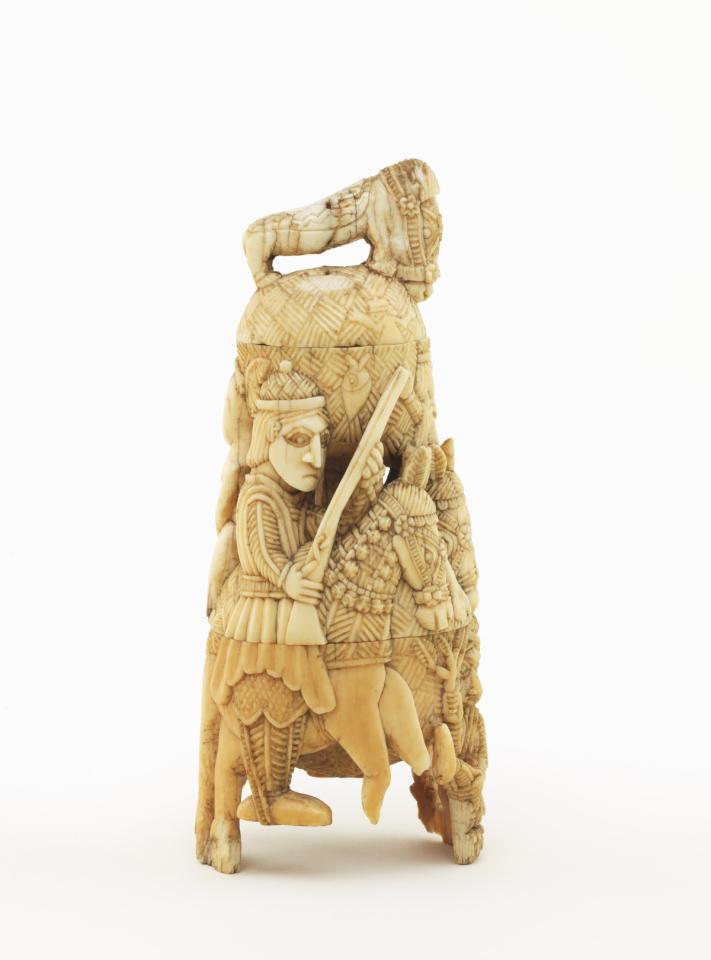
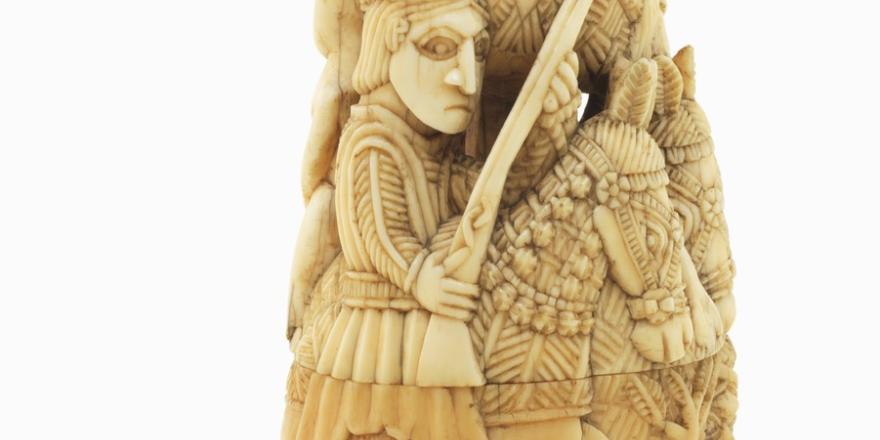
Afro-Portuguese luxury table vessel
Edo/Bini, Kingdom of Benin (in present-day Nigeria)
First half of the 16th century, ivory, H. 19.2 cm
Former collection of Frans Maria Olbrechts (1899–1958)
Donated in 1974 by his widow Margriet Maurissens
MAS, AE. 1974.0025.0001
Photo: MAS (Bart Huysmans, Michel Wuyts)
This expertly carved table vessel was made in the early 16th century in the Kingdom of Benin on commission from the Portuguese, the first Europeans to come into contact with the oba (king) of Benin. The combination of European formal elements and African iconography shows how Benin’s ivory carvers catered to European tastes.
The MAS showpiece is one of the oldest surviving ivory vessels (salt cellars, or saleiros) in Edo-Portuguese style. Afro-European ivories were prestige objects displayed during lavish banquets of the European elite. They bear witness to trade and early diplomatic relations between Portugal and the Kingdom of Benin. It is one of the earliest examples of cultural exchange between Africa and Europe.
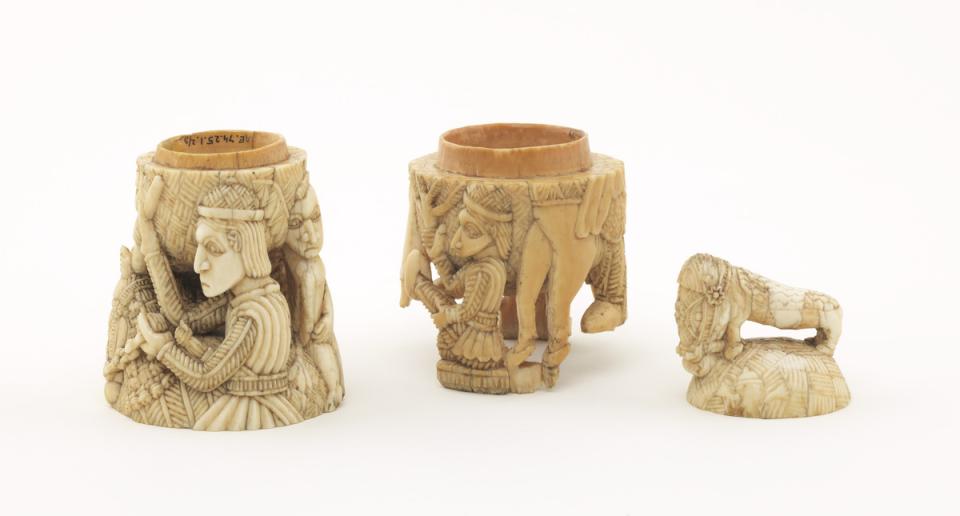
Inside the object, two small bowls are carved out, intended for the then valuable pepper and salt. The main figures are armed Portuguese horsemen. The fish motif symbolizes Olokun, the Benin deity of the ocean and bringer of prosperity. It refers to trade with the Portuguese.
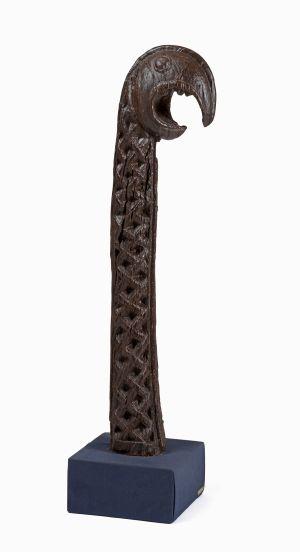
Cast of Anglo-Saxon stem decoration with a dragon motif
Unknown (sculptor)
Collection of the City of Antwerp
AS.1944.006.049
Photo: Bart Huysmans & Michel Wuyts