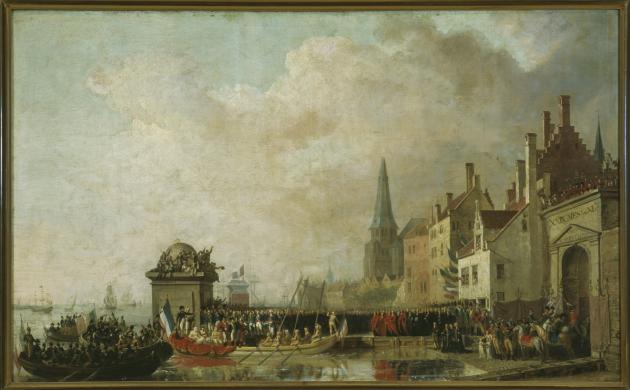
Napoleon's visit to Antwerp in 1803 was a high point for the city on the Scheldt. Joséphine de Beauharnais, Napoleon's wife, ordered a painting to immortalise the entry. This is a preliminary sketch for that.
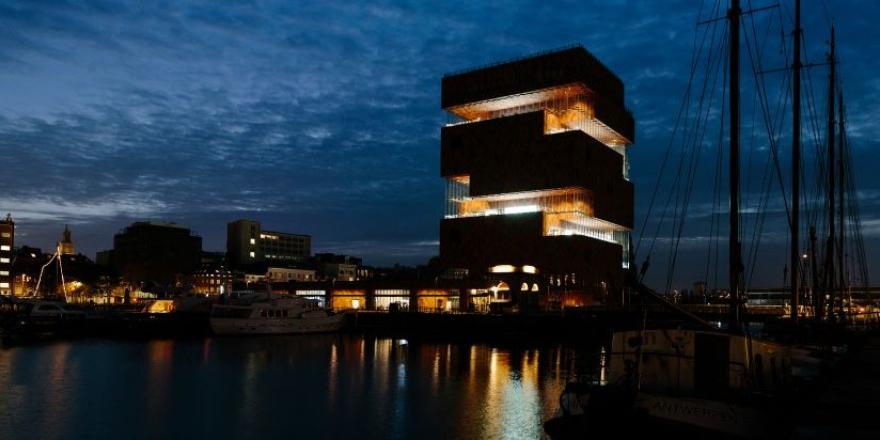
At the request of the city of Antwerp, the Antwerp artist Guillaume Bijl created the artwork Saluting Admiral Couple for the fifth anniversary of the MAS. The work gives the monumental building a playful and surprising touch.
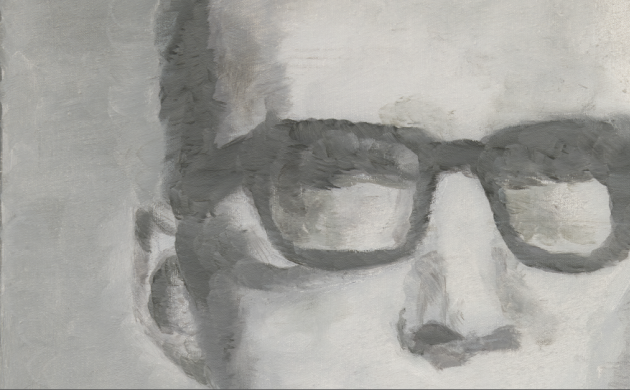
For the exhibition "Glasses", Luc Tuymans looks back at his oeuvre thematically for the first time. It includes portraits, of ‘nameless people’ and historic figures, and other works. The leitmotiv is a ‘pair of glasses’.
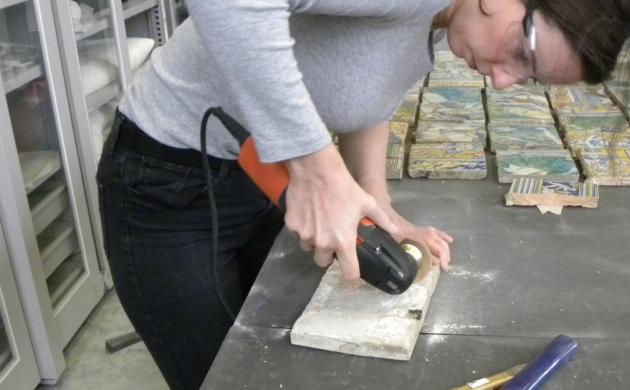
The tile panel 'The Conversion of Saul' is one of the most important pieces of the MAS I Vleeshuis collection, the collection of applied arts and history from the city of Antwerp.
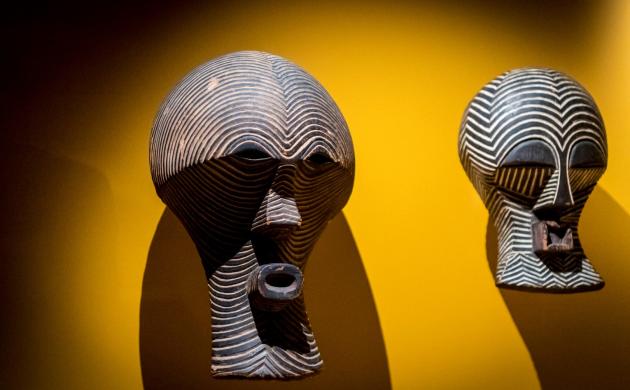
The MAS preserves culturally and historically sensitive Congolese heritage. In what circumstances did this collection of approximately 3,800 cultural objects come into being? A two-year research project will map this out more clearly.
The MAS collection consists of more than 500,000 objects about art, cultural traditions and history of the city and port of Antwerp. But also of Europe, Asia, Africa, America and Oceania.
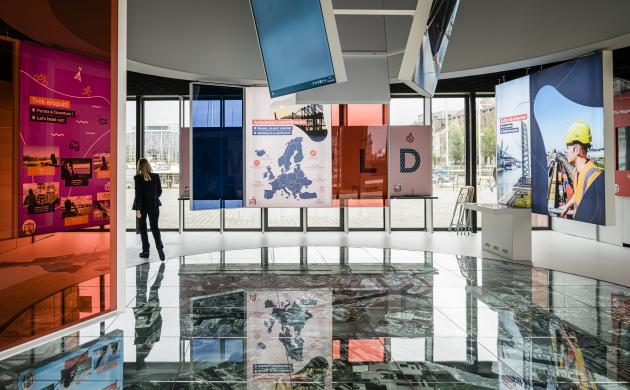
At Portopolis you put on a VR visor for a 360° tour and feel the port come to life! Walk across the large aeriel photograph and discover all special hotspots on offer in our port.
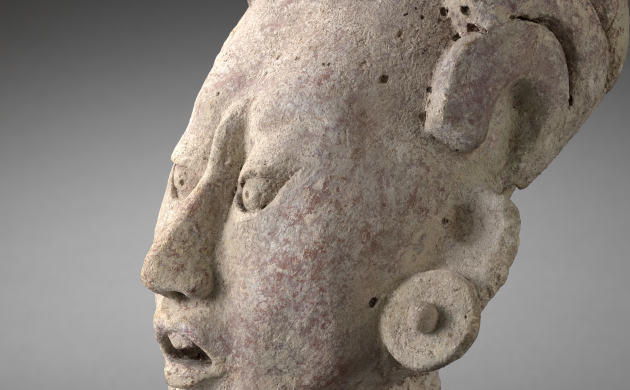
For the exhibition 'Postcolonial?' at the House of European History in Brussels, the MAS is lending an artefact from Mayan culture. It is an object from the collection of Paul & Dora Janssen-Arts.
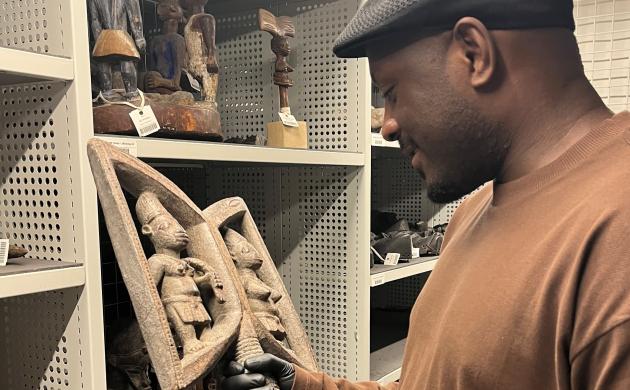
FREE ENTRANCE | From October 25, 2025, dance is the starting point in the Visible Storage for delving into the MAS collection. Eight people from dance communities in Antwerp rummaged through the depots together with the curators.
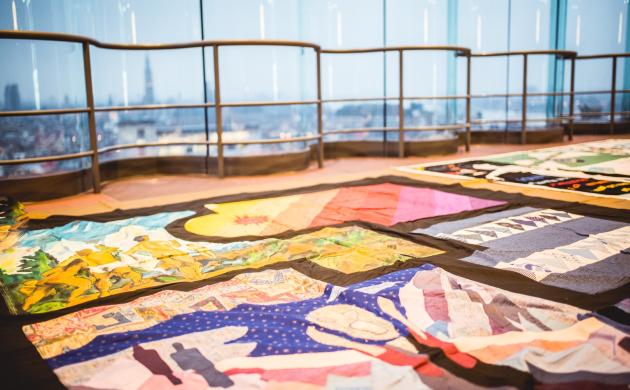
The Flemish non-profit organisation Sensoa donated its collection of quilts to the MAS. It consists of unique and personal canvases, each commemorating an AIDS victim. The creations are not limited to the traditional quilting (patchwork) technique. Some canvases were drawn or painted.